.svg)

























Why thinking about an LCA?
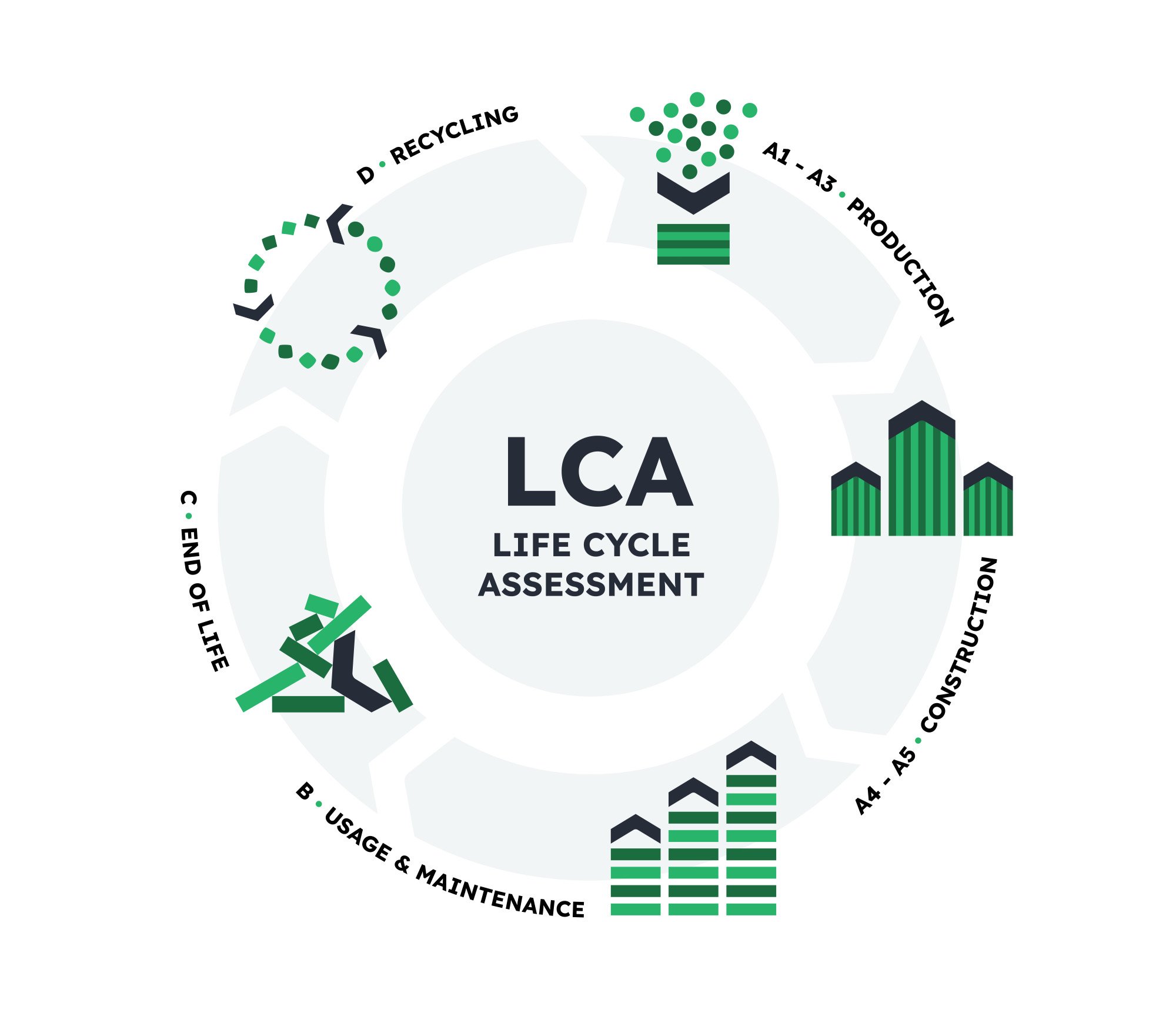
A Life Cycle Assessment (LCA) provides businesses with insights into a specific product's environmental impact and identifies opportunities to answer the critical question: how to reduce the environmental impact of that product?
Strategic decision-making tool
LCA allows you to select the appropriate:
Energy sources for production
Materials
Transportation methods
Recycling or waste practices
An LCA assists in making strategic decisions, both in choosing between product alternatives and in optimizing the environmental performance of business processes. It's a data-driven approach to identify operational efficiencies through reducing material use, energy use, waste generation, and emissions throughout the entire lifecycle of the product.
Understanding environmental impact categories
Based on the physical flows of materials and energy associated with the product, an LCA evaluates many different effects on the environment. These environmental effects are grouped in various impact categories.
The best known and most important impact category is global warming potential or climate change.
Global warming—the changes in surface air temperature—is caused by emission of greenhouse gases (GHG) into the atmosphere. GHG are produced by human activities such as carbon dioxide (CO2), methane (CH4), and nitrous oxide (NOx). The different GHG emissions are measured in terms of carbon dioxide equivalents (CO2eq).
Business benefits of LCA
An LCA is an effective way to
Prioritize and assess opportunities to create added value
Increase brand value (brand positioning)
Improve sustainable design decisions (life cycle impact)
Make better procurement decisions (raw materials as well as suppliers)
Achieve cost savings
Report to stakeholders about sustainability performance