.svg)
Digital Product Passport
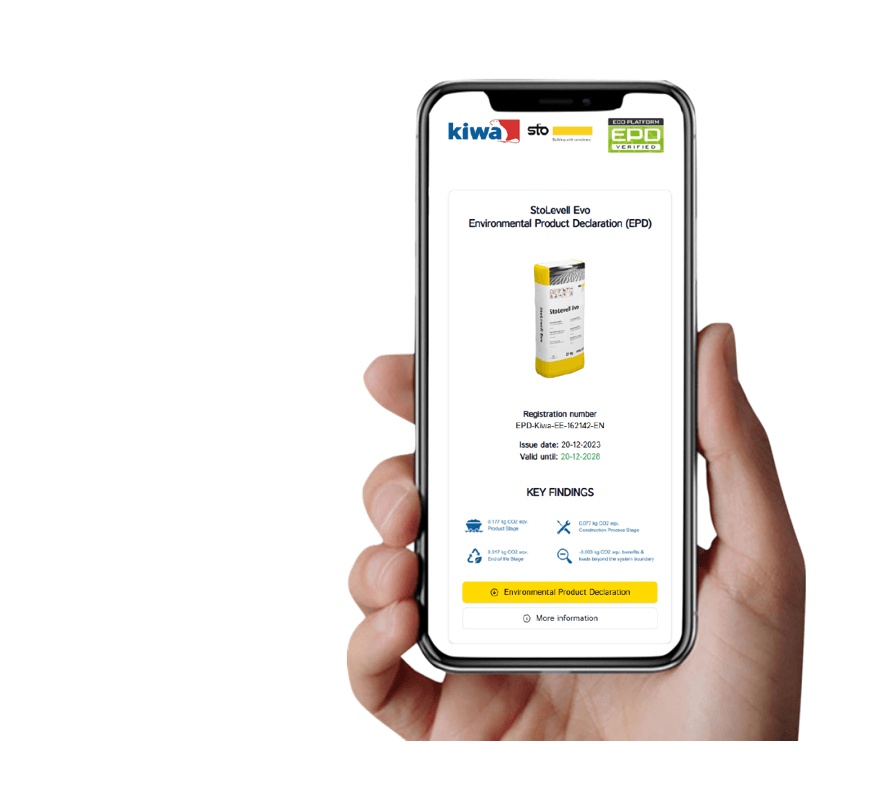
This follows from the Ecodesign for Sustainable Products Regulation (ESPR), which came into force in June 2024*. Where ESPR initially covered electronics and electrical equipment, the DPP format from this legislation has now been adopted for many other industries, including construction products.
The new CPR
According to the new CPR, manufacturers will be required to issue a combined Declaration of Performance and Conformity (DoPC), replacing the Declaration of Performance (DoP) that has been in place since 2011. Environmental information will be required in the DoPC, starting with Global Warming Potential and then later extending to the 13 core indicator set of the EN 15804:A2 and from 2031 onwards also including the 6 additional indicators of the EN 15804:A2.

The Digital Product Passport for construction manufacturers
All products must have a DPP before they can be placed on the market. The EU Commission will submit delegated acts for specific product groups that specify the requirements for the respective DPP. So we will have to wait a little longer, before we know exactly what the DPP for construction products will look like. But one thing is clear already, it will contain environmental performance data and these can be supported with a Environmental Product Declaration (EPD) as the communication format for environmental data conform the EN 15804:A2. And this EPD should then be machine readable according to the ISO 22057 standard.
The DPP could present a significant data challenge. Manufacturers need to collect and structure data more thoroughly then they may have done before. It presents a good moment to rethink the way you handle data as well as to consider automation of LCA and EPD within the company. R<THINK offers a comprehensive way to structure and handle data collection and combine this with declarations such as EPD, Corporate Carbon Footprint and CSRD ES1.
Timeline
The requirement to have a DPP available in the decentralized EU system will be effective January 2028. From July 2026 the register will be open and manufacturers can place DPP's voluntarily. The digital information on the product and its life cycle must be easily accessible by scanning a data carrier, such as a QR code or NFC tag, which should be attached to the product. The DPP is a decentralized system set up and maintained by economic operators. The economic operator must provide a backup copy of the DPP via a digital product passport service provider (independent third party) after placing a product on the market to ensure that the information is still available after insolvency or termination of the activity.
Support for SME
The EU Commission must support SMEs when drafting ecodesign requirements. It should take into account the impact on SMEs and in particular micro-enterprises operating in the respective product sector. It must support SMEs, for example, by providing guidelines, offering training or financial support (including tax concessions) and financing programs, together with the EU Member States.
Interesting reads:
Webinar Ecodesign for Sustainable Products Regulation (ESPR)
Ecodesign for Sustainable Products Regulation (ESPR) - EU information
*The Regulation establishing a framework for the setting of ecodesign requirements for sustainable products (EU) 2024/1781 was published in the EU Official Journal on 06/28/2024 and came into force on 07/18/2024. It replaces the Ecodesign Directive 2009/125/EC, which created requirements for the ecodesign of energy-related products.