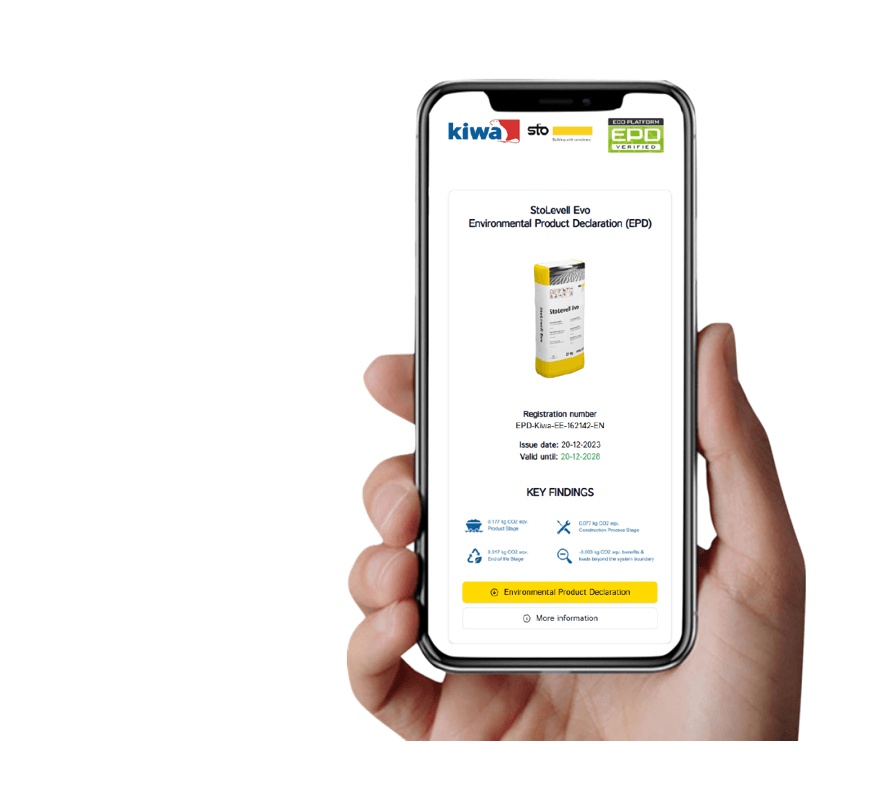
Data is generated in LCA and EPD software, like our R<THINK LCA suite. It can then be shared, for which we recently launched our R<THINK Share suite. And there is starts. Today we share environmental data almost exclusively through EPD and in some cases through databases, which in their turn are connected to building LCA software. This is all publicly available data, sometimes under a license agreement, but for most of the users free of cost.
CPR and ESPR will change the data flow
With R<THINK Share we see several new ways of data sharing emerging. Most important might be the legally required sharing under the CPR or ESPR in the form of a digital DoPC or Product Passport (DPP). For those manufacturers that move under the new CPR a data link in the EU registry to their DoPC/DPP is required before you can bring your product to market. Although the first product groups will only move under the CPR in 2027/2028, already we see that this casts its shading forward. The verification by a notified body (NoBo) is required. And once the data has been verified, you are free to share it with your customers or any other data users.
DPP may replace the EPD
The DPP will be digitally available, the environmental data in the DPP will be locked/authenticated and the DPP can be made available by the manufacturer (directly or through a DPP service provider). Since the data in the DPP is NoBo verified, it can be used to substantiate any green claim the manufacturer wishes to make, for instance showing year or year improvements in carbon footprint, or any other indicator from the essential characteristics that are required in a DPP. Once a manufacturer has a DPP for all its products, we see little need to also provide EPD’s for the same products. Although an EPD provides more information on the LCA modelling than the DPP, and for that would be preferable, the extra costs for publishing EPD’s would no longer pay out, with already DPP available. Also the manufacturer can always chose to publish more information voluntarily in the DPP as extra information. This extra information does not fall under the NoBo verification, so it would be self-declared, but nonetheless it can be included to provide more transparency should the manufacturer wishes to do so.
Direct data sharing
With this data flow under the CPR/ESPR coming into force, we believe that this will become the dominant data flow. This environmental data is verified and authenticated and no other data for the same product can be declared for the essential characteristics, as these are declared with in the DPP. It is good to notice that the environmental data on your DPP originate from R<THINK Share and there the manufacturer can built collections and share the same data directly with whomever, for as long as needed, directly through API connections. Here we foresee a strong development. Most importantly, directly to your customers. This could be one on one, but also through common connectors in R<THINK Share to groups of users or through data pools, that today already distribute commercial and technical data, for the same products. The future will tell which route will be favored. Important characteristics of these data flows are that they are private (no public disclosure is needed), real time, online, trusted and authenticated.
Both verified and not verified data can be shared
Within R<THINK Share we decided to make it possible to share both verified, but also not verified data. This is relevant for the Dutch situation where data needed for public tendering often does not need to be verified in the early stage, and only needs to be delivered as third party verified at the BAFO phase of the tendering or even only after the contract has been awarded.
EPD remains important for the voluntary zone
At the same time there will always be products that do not (yet) fall under the new CPR and for those the voluntary route through EPD program operators remains the common route.
.svg)